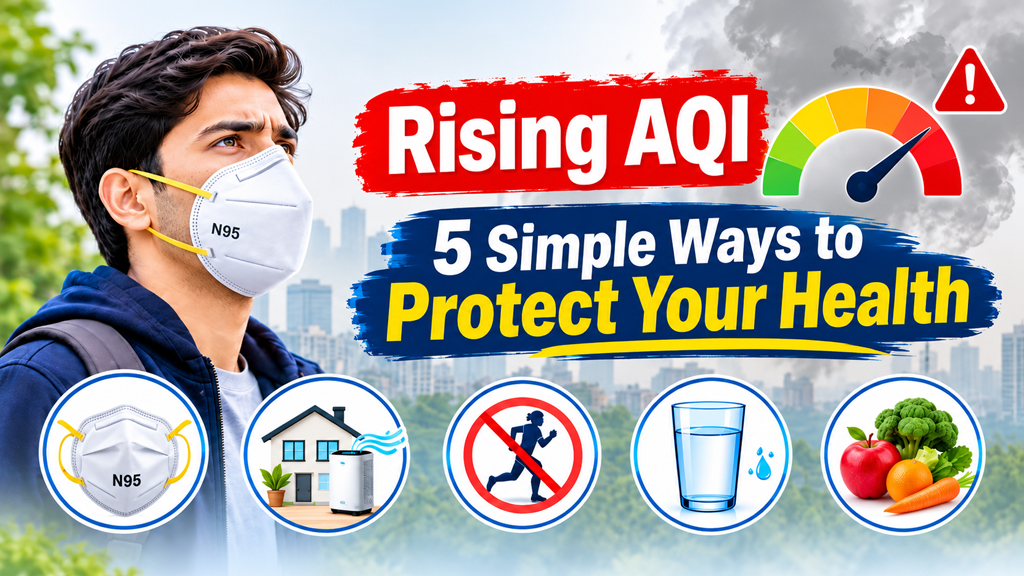

Rising AQI: 5 Simple Ways to Protect Your Health
As winter settles over the Delhi NCR, the familiar, unwelcome blanket of smog has returned, pushing the Air Quality Index (AQI) into hazardous territory of over 400 in several areas. The sky is a hazy grey, and the air carries a distinct sting. To combat this recurring seasonal crisis, authorities have taken measures like work-from-home mandates for offices and bans on construction dust. While the government battles the pollution at a systemic level, we must take our own precautions. Here are five practical ways to safeguard your health.
- Upgrade Your Mask to N95
When the AQI crosses the 400 mark, relying on a simple cloth covering or a basic surgical mask is like using an umbrella in a hurricane. Those materials cannot filter out the microscopic PM2.5 and PM10 particles that penetrate deep into your lungs. Whenever you step out, make sure you wear a well-fitted N95 or N99 mask. It should sit snugly against your face without leaving gaps. Treat your mask as an essential winter accessory, just like a warm jacket, because it serves as your primary physical barrier against the toxic outdoor air.
- Improve Your Indoor Air Quality
Your home should be a sanctuary, but polluted air easily sneaks indoors. Keep your doors and windows firmly shut, especially during the early mornings and late evenings when the smog settles closest to the ground due to low wind speeds. Invest in a good quality air purifier equipped with a high-efficiency filter and keep it running in the rooms where you spend the most time.
Additionally, swap dry sweeping for wet mopping. Dry brooms simply kick settled dust back into the air you breathe, while a damp cloth effectively traps the harmful particulate matter right on the floor.
- Reschedule Your Fitness Routine
If you love a brisk morning walk or a jog around your local park, it is time to hit pause. During these winter months, a shallow atmospheric boundary layer traps pollutants close to the ground, making early mornings the most dangerous time to exercise outdoors. Heavy breathing during a workout draws those toxic particles much deeper into your lungs. Shift your fitness routine indoors. Embrace home workouts, indoor cycling, or yoga. If you crave fresh air, wait until the afternoon when the sun is out and the wind has slightly dispersed the heavy smog.
- Practice Daily Nasal Hygiene
One effective, traditional way to clear trapped pollutants from your respiratory tract is practicing daily nasal hygiene. In urban areas, where thick smog coats everything, taking steam every evening works wonders for an irritated throat and congested nose. Add a few drops of eucalyptus oil or a pinch of carom seeds to hot water and inhale deeply. Additionally, you can practice Jal Neti or use a simple saline nasal spray after returning home. These basic, time-tested practices flush out microscopic dust particles before they can trigger allergies, cause inflammation, or travel deeper into your lungs.
- Eat for Better Lung Health
What you eat plays a massive role in how your body handles environmental stress. Heavy air pollution triggers inflammation and oxidative damage inside your respiratory system. Combat this by loading up on antioxidant-rich, immunity-boosting foods. Traditional Indian kitchen staples like jaggery, turmeric, ginger, and tulsi are fantastic for soothing an irritated throat and clearing respiratory pathways. Make it a habit to sip on warm herbal teas throughout the day. Staying highly hydrated is equally crucial, as water helps your kidneys efficiently flush out the toxins that inevitably make their way into your bloodstream through the polluted air.
Spending the winter months in the national capital region is undeniably challenging, but it doesn’t have to compromise your well-being. By making smart, deliberate choices—like upgrading your protective gear, purifying your indoor spaces, and adjusting your daily routines—you can significantly reduce your exposure to harmful pollutants. While authorities push forward with strict construction bans and mechanical road sweeping to clean up our airshed, your personal health remains in your own hands. Stay updated with real-time AQI readings, adapt to the changing environment, and prioritize your body’s needs. Take care of yourself this season!